

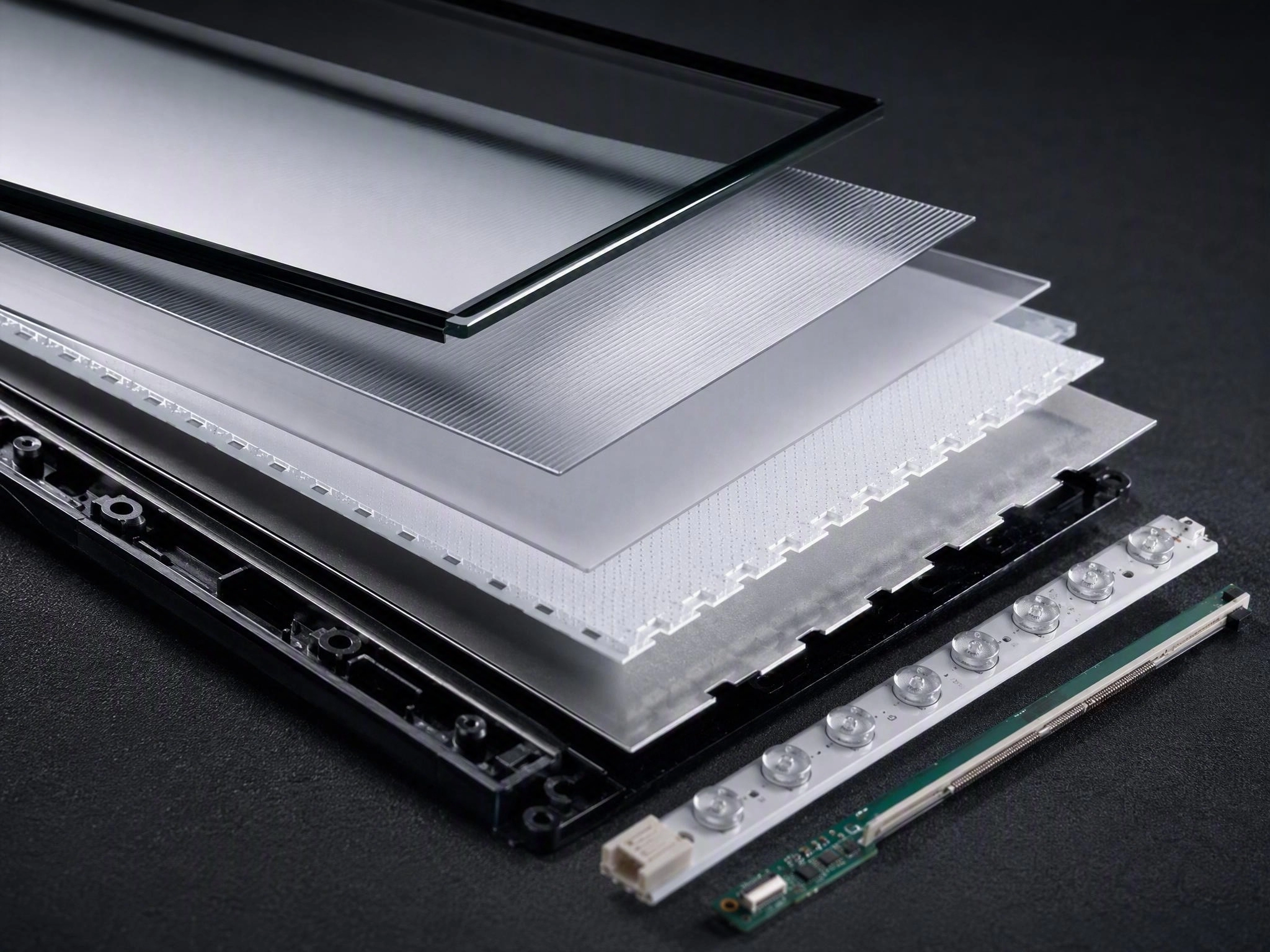
Nếu bạn đang tìm kiếm một màn hình cho sản phẩm mới, bạn sẽ nhanh chóng gặp thuật ngữ mô-đun LCD, thường được viết tắt là LCM. Hướng dẫn này giải thích mô-đun LCM là gì và tại sao cấu trúc bên trong của nó lại quyết định trực tiếp chất lượng màn hình mà khách hàng của bạn trải nghiệm.
Định nghĩa mô-đun LCD
Mô-đun LCD không chỉ đơn thuần là một tấm kính. Nó là một đơn vị hiển thị hoàn chỉnh, sẵn sàng tích hợp, kết hợp giữa kính LCD với IC điều khiển, mạch in linh hoạt (FPC), đơn vị đèn nền và, trong nhiều trường hợp, một bảng cảm ứng. Sự tích hợp này chính là yếu tố biến kính tinh thể lỏng thô thành một màn hình hoạt động.
Các lớp chính
- Kính LCD & bộ phân cực: kiểm soát ánh sáng để tạo ra hình ảnh
- IC điều khiển & FPC: chuyển đổi tín hiệu điện thành lệnh pixel và kết nối với bo mạch của bạn
- Đơn vị đèn nền: cung cấp ánh sáng đồng đều cho hình ảnh dễ đọc
- Bảng cảm ứng (tùy chọn): thêm khả năng nhập liệu tương tác
Tại sao chất lượng mô-đun lại quan trọng
Một LCM chất lượng cao mang lại độ đồng nhất về độ sáng tốt hơn, góc nhìn rộng hơn, độ tin cậy cao hơn và tuổi thọ dài hơn — ảnh hưởng trực tiếp đến uy tín thương hiệu của sản phẩm bạn. Lựa chọn một nhà sản xuất có kinh nghiệm như BELIJ đảm bảo rằng mỗi lớp được thiết kế chính xác và kiểm tra nghiêm ngặt.